

Technology
Proven. Scalable. Ready
Introducing our technologies
Technology Platform
A flexible technology platform to meet your performance and net zero targets
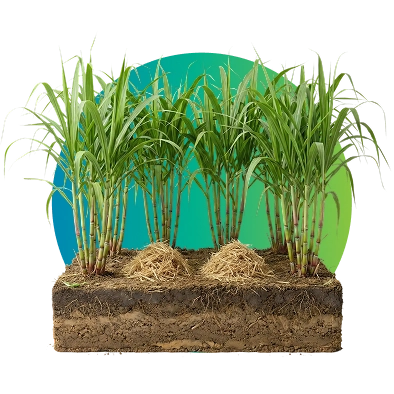
GranBio's technologies were specifically developed as an improvement to industrial sulfite pulping chemistry, widely used since the 1940s for both pulp and advanced ethanol production, to overcome its low sugar yield and maximize overall efficiency. We offer a spectrum of processing options to fit your specific needs. Our AVAP® technology maximizes yield and net zero performance while keeping costs competitive through chemical fractionation. Our GP+® technology uses a thermo-mechanical fractionation process to transform biomass into paper products, second-generation ethanol, or biochemicals at a lower cost point, while still improving yield compared to traditional options.
Continue scrolling to learn more about GranBio's technology platform.
AVAP® technology
AVAP®
Unrivalled performance in Waste2Energy
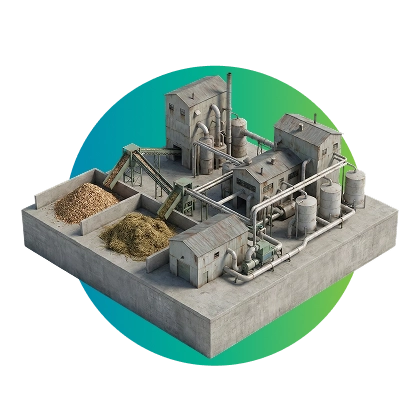
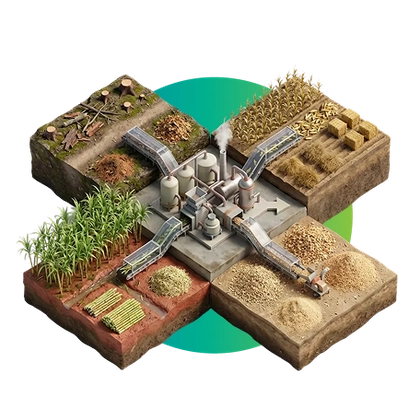
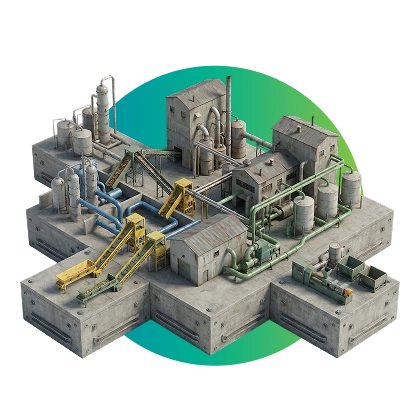
Our AVAP® technology is the gold standard for transforming cellulosic biomass into sustainable products with the lowest carbon footprint at a competitive cost, compared to carbon capture alternatives.

How it works
Low-carbon SAF 
Low-carbon biochemicals 
Advanced Material 
Low-carbon Ethanol 
DIAGRAM KEY:


GP+® Technology
GP+®
Simple and robust, with low production costs
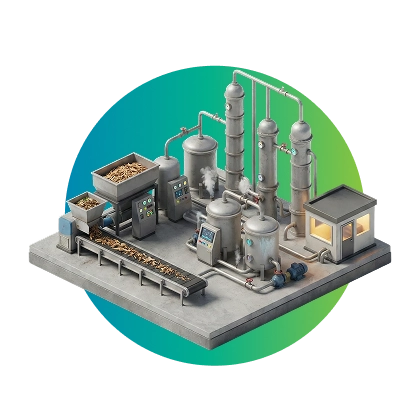
GP+® is a patented one-stage thermo-mechanical process that uses conventional pulp mill equipment in a standard configuration to effectively fractionate various forms of biomass, including agricultural and forest residues. The process enables conversion into cellulosic ethanol using low enzyme dosages, resulting in cost efficiency and operational simplicity.
No Chemicals

The process relies on water steam and mechanical compression, eliminating the need for chemicals and chemical recovery systems.
Low CAPEX & OPEX

GP+® offers one of the lowest CAPEX and OPEX models in the industry for transforming cellulosic biomass.
Feedstock Flexible

We have successfully converted more than 20 types of forest and agricultural biomass into fuels, chemicals, and materials without competing with food or arable land.
Proven Technology

GP+® has been operating commercially since 2016 through licensing agreements.
Improved Product Quality

In addition to first-grade cellulosic ethanol, when applied to paper production, GP+® increases the final product’s mechanical strength.
High-Value Co-Product

The process yields nanocellulose as a valuable co-product. Nanocellulose is gaining relevance as a high-performance material for applications such as paints, inks, coatings, lightweight automotive compounds, tires and rubber products, and packaging materials.
How it works
2G Ethanol
DIAGRAM KEY:
BioPlus Technology
BioPlus
Nanocellulose done right
Our AVAP and GP+ technologies produce a high-value co-product: nanocellulose. With our adjacent BioPlus technology, we have achieved what others couldn't: two pre-treatment routes to produce both CNF (cellulose nanofibrils) and CNC (cellulose nanocystals), along with complimentary nanocellulose products. We offer the most flexible and widely applicable nanocellulose technology, with significant cost competitiveness compared to other players.
Feedstock Flexible
While other processes use only pure cellulose pulp, we can use a variety of feedstock, such as low cost softwood, hardwood palm residue, and cane straw.
Versatile

Our process is the only one in the world capable of producing both nanocellulose crystals (CNC) and fibrils (CNF). Altogether, we've developed five proprietary, tailor-made nanocellulose products.
Cost competitive
Breakthrough production costs with 98% chemical recovery.
Drop-In ready

Our proprietary processes allow for the production of a range of nanocellulose forms in solid “drop-in” form.
How it works
CNC, CNF, L-CNC, L-CNF
DIAGRAM KEY:


