Not enough supply
- Large demand and supply gap that HEFA alone cannot tackle
- Greenfields projects take years to develop and build

A flexible technology platform to meet your performance and net zero targets.
At GranBio, community is not a checkbox. It is our purpose and our promise to stand alongside the people we serve.
Fast-forward to net zero
To meet Net Zero targets, the International Air Transport Association (IATA) projects an exponential surge in demand for sustainable aviation fuel (SAF) beginning in 2030 and continuing through 2050. While HEFA (hydrotreated esters and fatty acids) currently leads the SAF landscape, market forecasts suggest that cellulosic ethanol-to-jet (ETJ) pathways will experience substantial growth.
GranBio has tested our patented technology for over 10,000 hours, yielding industry-leading results in carbon intensity, production cost, and time-to-market. Continue reading to learn more about how our technology stacks with competing pathways and how to secure your supply. The U.S. Department of Energy (DOE) and its Independent Engineers at ICF, a global consulting and technology services company, have validated the technology's performance.
SAF Pathways Comparison
Compared to other pathways, ETJ holds the highest technology readiness level - it doesn't just work in theory, it's real and around the corner with our soon-to-be-built commercial-scale SAF plant in the USA. When fully deployed to 1-billion GPY by 2040, our SAF pathway will deliver the highest feedstock-to-fuel yields, translating into the most competitive production cost compared to other low-carbon jet fuel alternatives.
| GranBio Cellulosic ETJ | Gasification FT | Hydrothermal Liquefaction | PTL (e-SAF) | HEFA | |
|---|---|---|---|---|---|
| Key Takeaways |
Most competitive balance of OPEX, CAPEX and carbon footprint. Near term implementation. |
Low technology readiness level, decades from realization. High CAPEX. |
High CAPEX and energy demand, smaller capacity plants |
Low technology readiness level, decades from realization. High CAPEX and OPEX |
Limited feedstock with escalating price. Low CAPEX* |
| Feedstock |
Lignocellulosic biomass such as agricultural and forest residues |
Lignocellulosic biomass, municipal solid waste |
Lignocellulosic biomass |
CO₂ |
Vegetable oils, animal fats, waste greases |
| ASTM approval |

|
|

|
|
|
| Technology Readiness Level |
6 |
4 |
5 |
3-4 |
9 |
| CAPEX $/gal (1st commercial) |
X |
2X+ |
2X |
6X |
X/3 |
| Production Cost $/gal (1st commercial) |
Y |
~Y |
~Y |
2.5Y |
~Y+ |
Source: Various public industry and government reports, available upon request.
*Price of HEFA feedstocks have more than doubled over the past few years due to rising demand for renewable diesel and SAF
production and limited availability (DOE). Limited availability of HEFA feedstocks will constrain these facilities to 6–8% of total SAF
production by 2050 (ICF).
Strategies for Securing Net Zero
GranBio's ETJ pathway achieves the lowest carbon footprint of competing ETJ technologies. Our process solves for net zero, here's how:

Biomass residues incur zero emissions during production per international LCA methodology

The AVAP biomass fractionation process recovers 98+% of ethanol and SO2 for reuse in the process

Power and heat from biomass boiler

P&P mill sites are ideally located within short distance from feedstock and have low-carbon product transportation options, including ports and railway

GranBio's renewable energy complex will include renewable biomass power to the grid and SAF

All processes are energy integrated with our technology ETJ partner
Our process uses low-carbon-intensity, low-value biomass such as wood and agricultural residues, as feedstock. There are several advantages to people and planet:
• No competition with food nor land for food production • Lower production costs • Support nature conservation and regeneration
• Carbon recycling: the CO₂ released from burning our SAF is biogenic • Support local communities
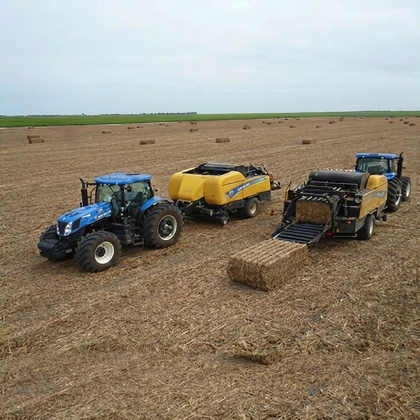
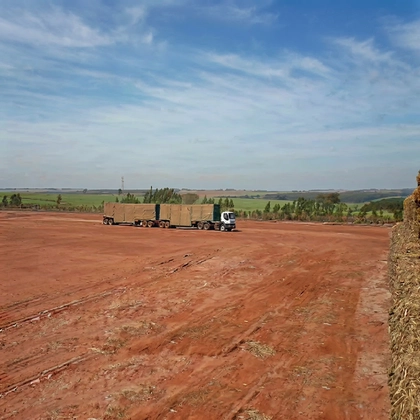
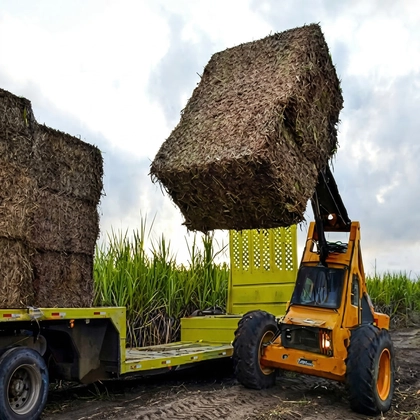
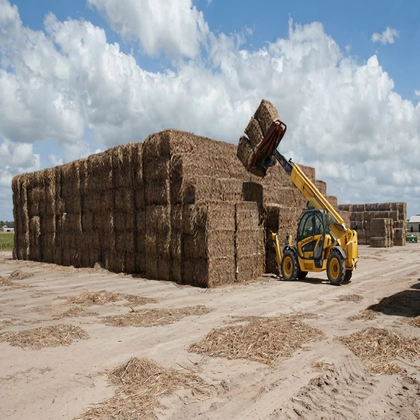
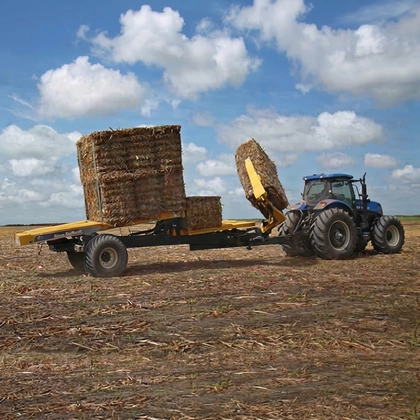
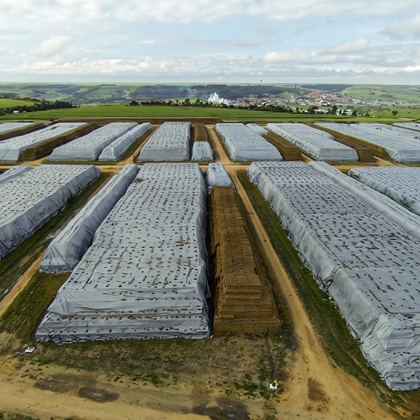
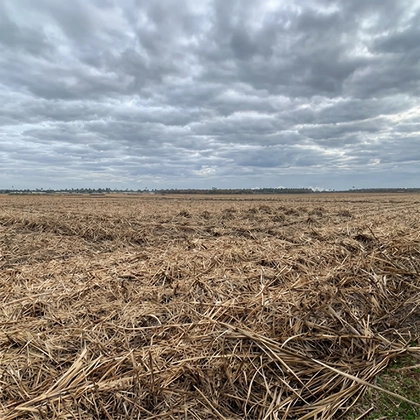
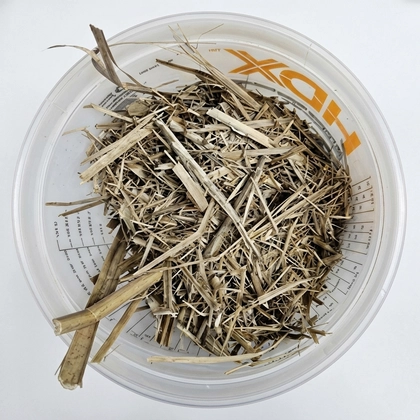
For agricultural residues, for instance, we have extensive expertise gained over the past ten years in harvesting, baling and transportation equipment for sugar cane straw agricultural residues. In addition, we have developed proprietary storage and processing best practices.
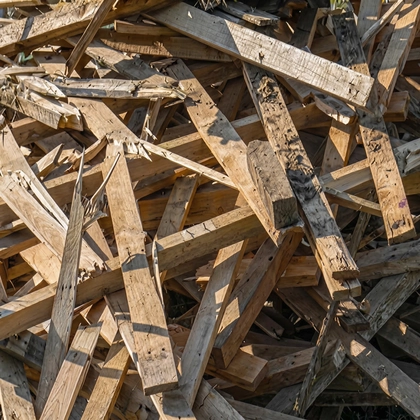
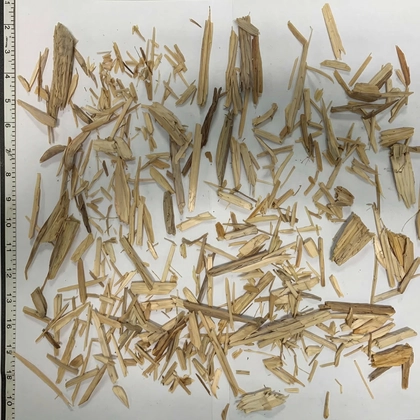
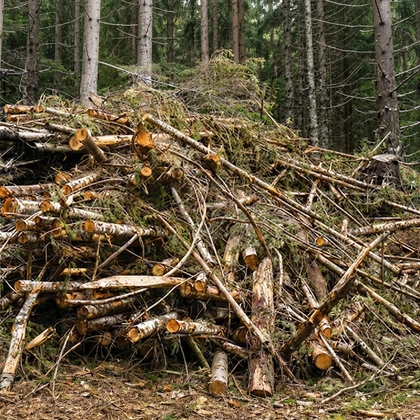
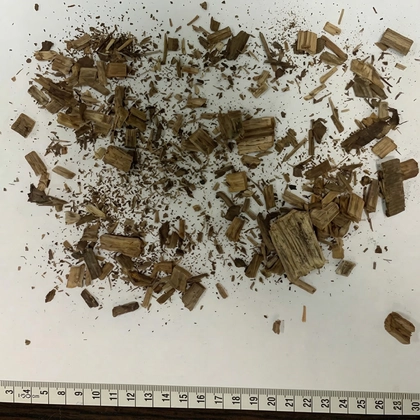
For woody biomass, we work with long-standing
partners, to ensure reliable and steady supply.


Abundant, low-value feedstock
According to DOE’s 2023 Billion-Ton Report, near-term resources can provide approximately 350 million tons per year of biomass above current uses, which would roughly double the current U.S. bioenergy economy. In a mature market there is a 1.1-1.5 billion tons of biomass production potential, per year, including all types of waste, such as forestry and agricultural. We will utilize a small fraction of the residual biomass available in the U.S. for production of 1-billion GPY SAF.
62.7 MM TPY
615 MM TPY
Source: US Department of Energy, 2023 Billion-Ton Report
✦ Production of 1 billion GPY GranBio SAF will utilize
about 13 MM dry tpy residual biomass.
We offer two ways of accessing GranBio's Sustainable Aviation Fuel.
We offer technology licensing options for our AVAP technology, allowing interested customers to produce SAF at their own plants.
Customers can enter a long-term purchase agreement, securing their SAF supply directly from GranBio.
Now is the time to act! Reach out to our team to explore how we can support
in tackling your net zero targets at growth@granbio.com

Through our whole-barrel-approach, we produce a high-purity sugar stream from forestry and agricultural residues as a co-product of cellulosic ethanol. This sugar stream serves diverse applications across a wide spectrum of industries.
Learn more
Nanocellulose enhances performance across applications through reinforcement, transparency, rheology, and barrier properties, enabling advanced solutions for coatings, automotive materials, and packaging.
Learn more